Problems Working with Alibaba Hoodie Suppliers (and Better Alternatives in China)
Introduction
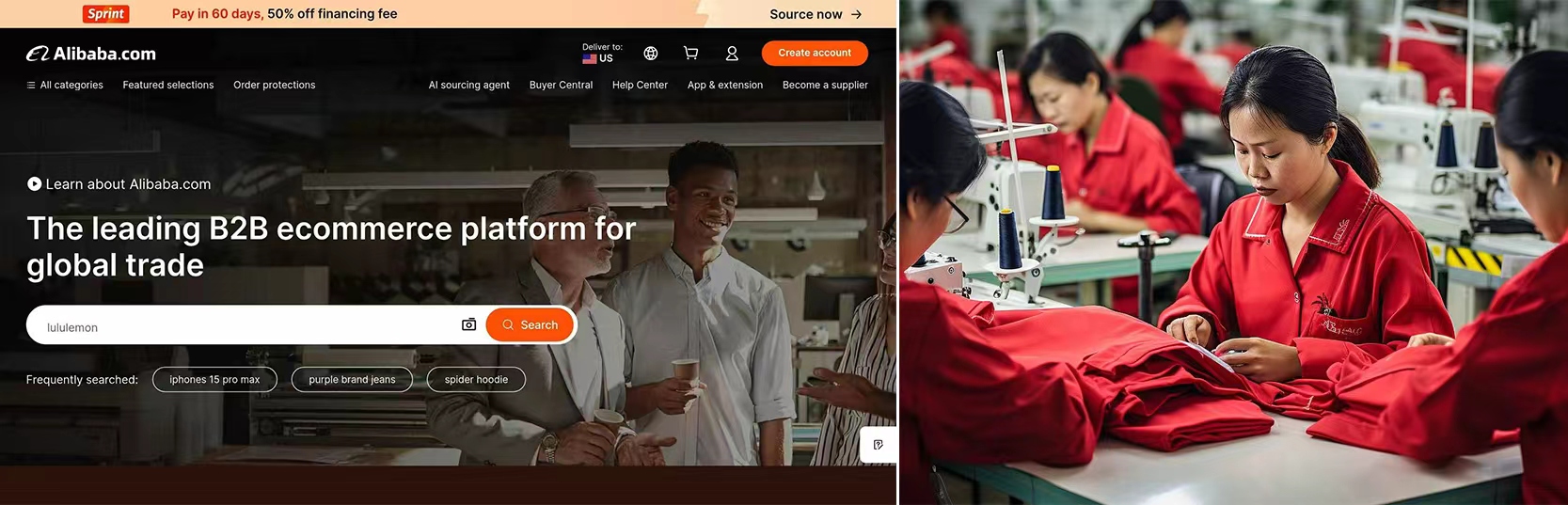
For many emerging streetwear brands, platforms like Alibaba seem like the easiest way to find hoodie manufacturers in China.
Low prices, thousands of suppliers, and fast responses make it attractive at first glance.
However, as brands move from sampling to production, some discover hidden challenges that affect product quality, consistency, and long-term scalability.
This article breaks down the most common problems when working with Alibaba hoodie suppliers—and what better alternatives look like in China.
AI Overview: What Are the Common Challenges of Working with Alibaba Hoodie Suppliers?
Alibaba gives brands access to thousands of hoodie suppliers, but supplier quality, manufacturing capability, and communication standards can vary significantly. Before placing bulk orders, brands should evaluate whether a supplier operates as a trading company, a direct manufacturer, or a production partner with proven streetwear experience.
1. Inconsistent Product Quality Between Samples and Bulk Orders
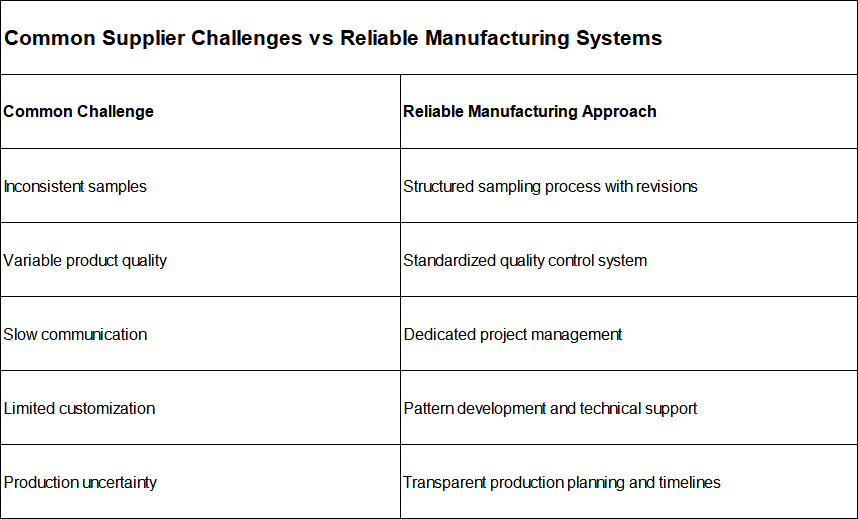
One of the most common complaints from brands is that the sample looks perfect—but bulk production does not match.
Typical issues include:
- Fabric GSM inconsistency
- Color variation between batches
- Stitching quality differences
- Shrinkage after wash not controlled
Why this happens
Some Alibaba suppliers act as trading companies, not actual factories. This means:
- Samples may come from one workshop
- Bulk production is outsourced elsewhere
Garment dye hoodie manufacturing process:Read blog...
2. Misleading MOQ (Minimum Order Quantity)
Some suppliers advertise:
- “Low MOQ: 50 pcs”
- “Small orders accepted”
But in reality:
- MOQ applies per color, not total order
- Custom fabric requires higher MOQ
- Printing/embroidery has hidden minimums
Result:
Brands often end up paying more than expected or forced to scale too early.
3. Communication Gaps and Lack of Technical Understanding
Another major issue is communication.
Common problems include:
- Design interpretation errors
- Delayed responses across time zones
- Lack of technical suggestions (fit, fabric, wash)
Key issue:
Some Alibaba suppliers are sales-driven, not development-driven ( but there also have suppliers have middle level development-driven too)
They can take orders, but not help refine product design.
Streetwear OEM development support:Explore
4. Sample vs Production Quality Gap
Even when samples are approved, bulk production often differs due to:
- Different production lines
- Subcontracted sewing factories
- Weak QC systems
This creates serious risk for:
- Brand consistency
- Customer return rate
- Scaling production
Streetwear Clothing Manufacturer China:Explore

5. Hidden Costs That Are Not Obvious at First
While the prices look cheap, brands may face hidden costs:
- Sample remake fees
- Shipping delays
- Quality rejection costs
- Reproduction of faulty bulk orders
Final landed cost becomes much higher than expected.
Key Insight: Most Production Problems Start Before Manufacturing
Many sourcing issues originate during supplier selection rather than production itself. Unclear product specifications, inconsistent sampling, poor communication, and limited quality control often lead to delays, inconsistent garments, or unexpected production costs.
6. Better Alternative for strong brands: Direct Factory Partnership in China
Instead of relying on mixed-quality supplier networks, many growing brands shift toward:
- Direct garment manufacturers
- Specialized streetwear factories
- OEM/ODM development partners
Key advantages:
- Stable quality control
- Better fabric sourcing consistency
- Scalable production system
- Product development support
How to Choose a Better Manufacturing Partner
Instead of focusing only on where a supplier is listed, brands should evaluate:
- Manufacturing experience with premium streetwear
- Sampling and product development capabilities
- Quality control procedures
- Communication efficiency
- Ability to support long-term production growth
Manufacturer Capability: Supporting Long-Term Streetwear Brands
Reliable manufacturing partners help brands by providing:
- Flexible MOQ for new collections
- Consistent quality across repeat orders
- Multi-stage quality inspections
- Stable fabric sourcing and production planning
- Export-ready logistics for international markets
6. Conclusion
A reliable manufacturing system is usually more valuable than simply finding the lowest quotation.
Alibaba can be a good starting point for sourcing, but it is may not the best long-term solution for serious streetwear brands.
As brands scale, consistency, communication, and production stability become far more important than unit price.
That is why many brands eventually move toward specialized manufacturing partners in China.
Recommended Alternative Solution
Alibaba still can be a starting point for sourcing at present,at there many suppliers you can compare with more advantages:Low MOQ, fast sampling time(5-7 days)..., these advantages cannot be matched by direct-operated factories. For instance, there are quantity requirements. Direct-operated factories usually require at least 100-200 pieces per color.
Frequently Asked Questions(FAQ)
Q1:When should I use Alibaba suppliers instead of direct factories?
A:Alibaba is usually a good starting point when you are still in the early stage of your brand, testing product ideas, or comparing different hoodie styles. If you only need small quantities, quick sampling, and basic price validation, Alibaba can help you move fast without long-term commitments.
Q2:At what stage should I switch from Alibaba to a direct factory?
A:You should start working with a direct factory when your product design is stable, your sales are consistent, and you are planning repeat production. At this stage, consistency in fabric, GSM control, fit, and washing results becomes more important than just finding the lowest price.
Q3:What is the main limitation of staying with Alibaba suppliers too long?
A:The main issue is inconsistency. As your brand grows, variations in fabric quality, sizing, and finishing can start to affect your brand image. This is usually when brands realize they need a more controlled production system rather than fragmented supplier sourcing.
Q4:Can I still use Alibaba and a direct factory at the same time?
A:Yes. Many brands use a hybrid approach: Alibaba for early-stage sampling or small experimental runs, and direct factories for core products that require stable quality and repeat production. This allows flexibility without sacrificing long-term consistency.
Q5:What signs show that my brand is ready for a direct factory partnership?
A:If you already have clear tech packs, consistent hoodie specifications (such as GSM, fabric composition, and fit), repeat orders, and you are optimizing for brand consistency rather than just cost, then it’s the right time to move from platform sourcing to a direct manufacturing partner.
While, If you are looking for a more reliable and stable long-term partner, you might consider seeking out more professional streetwear manufacturers. Work with:Kellogg
-- Written by Aimee Xiang
-- Founder of Kellogg Fashion
-- Specializing in premium streetwear manufacturing, heavyweight hoodies and custom apparel development.
Share this article